Skip to content
Level GroundOutdoor Co.

Deck repair · Oak Ridge, TN

Soft spots on your deck? Fix it right.

We replace rotted boards and rebuild joists, stairs, railings and whole sections. And we fix the reason it rotted, so you are not paying for the same repair again.

What we fix

  • Boards

    Rotted, cracked or loose deck boards replaced.

  • Structure

    Joists, stairs, railings or whole sections rebuilt.

  • The cause

    Soil against the framing and standing water dealt with, so the rot does not come back.

  • No surprise bills

    If we find hidden rot under the boards, we show you photos and quote it before we go further.

A real job · our own cabin

It looked newly repaired. Here's what was underneath.

We bought a cabin to turn into a rental. Its deck looked freshly repaired, and the home inspection didn't catch a thing. Here's what we found after we bought it, and why we don't cover up rot with new boards.

In April 2024, we looked over the deck on a cabin we had bought to turn into a short-term rental. It looked newly repaired. New boards. Clean railing. If you had walked across it, you would have thought it was in its best years. The home inspection didn't flag it either. An inspection can only judge what it can see, and from the top, there was nothing to see.

Three months later, we had it torn open, and the picture changed completely.

This was our cabin, our money, and soon our guests walking on that deck. We could have taken the repair at face value. Instead we made the call we make for any customer: stop, open it up, and look.
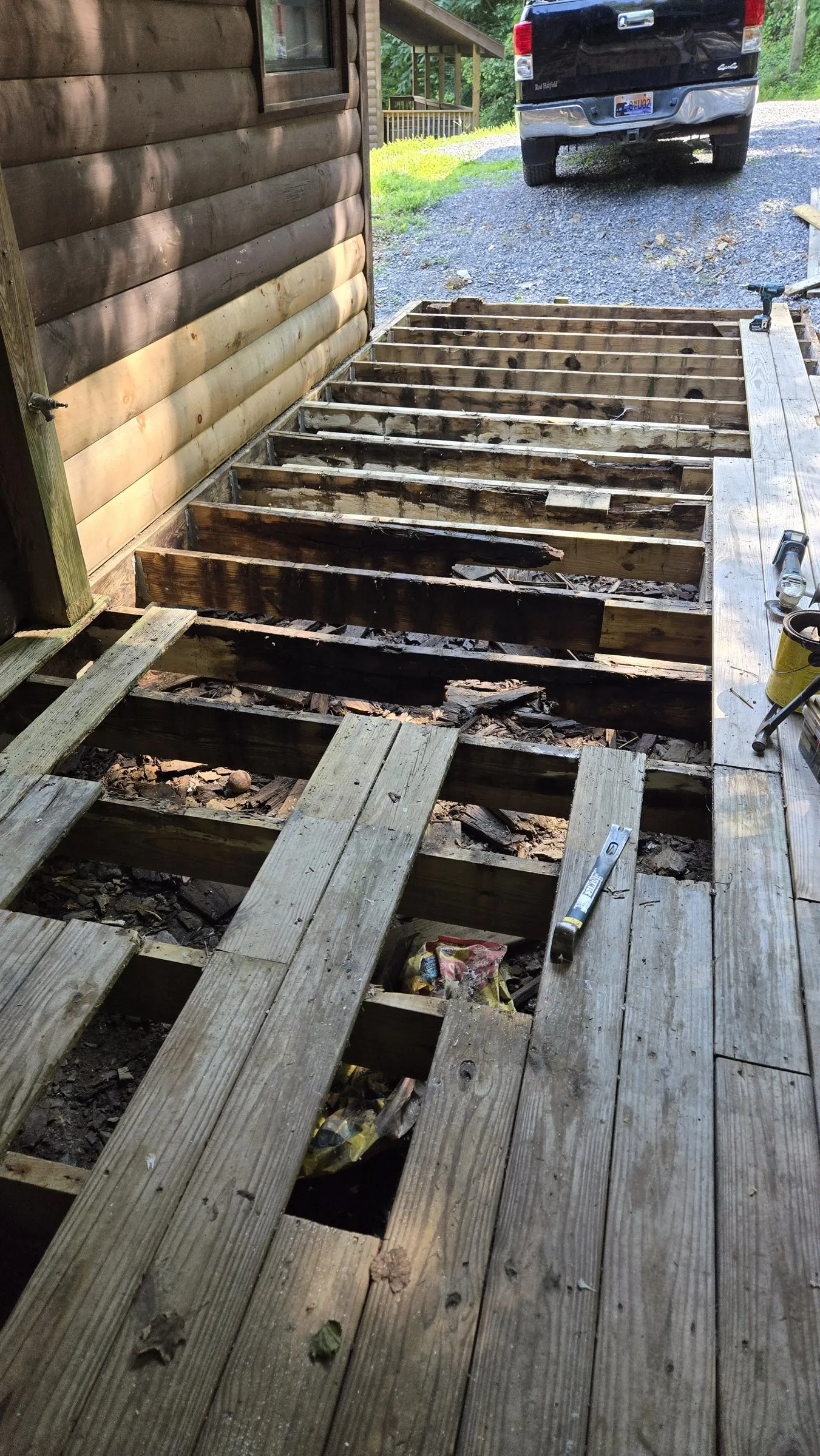
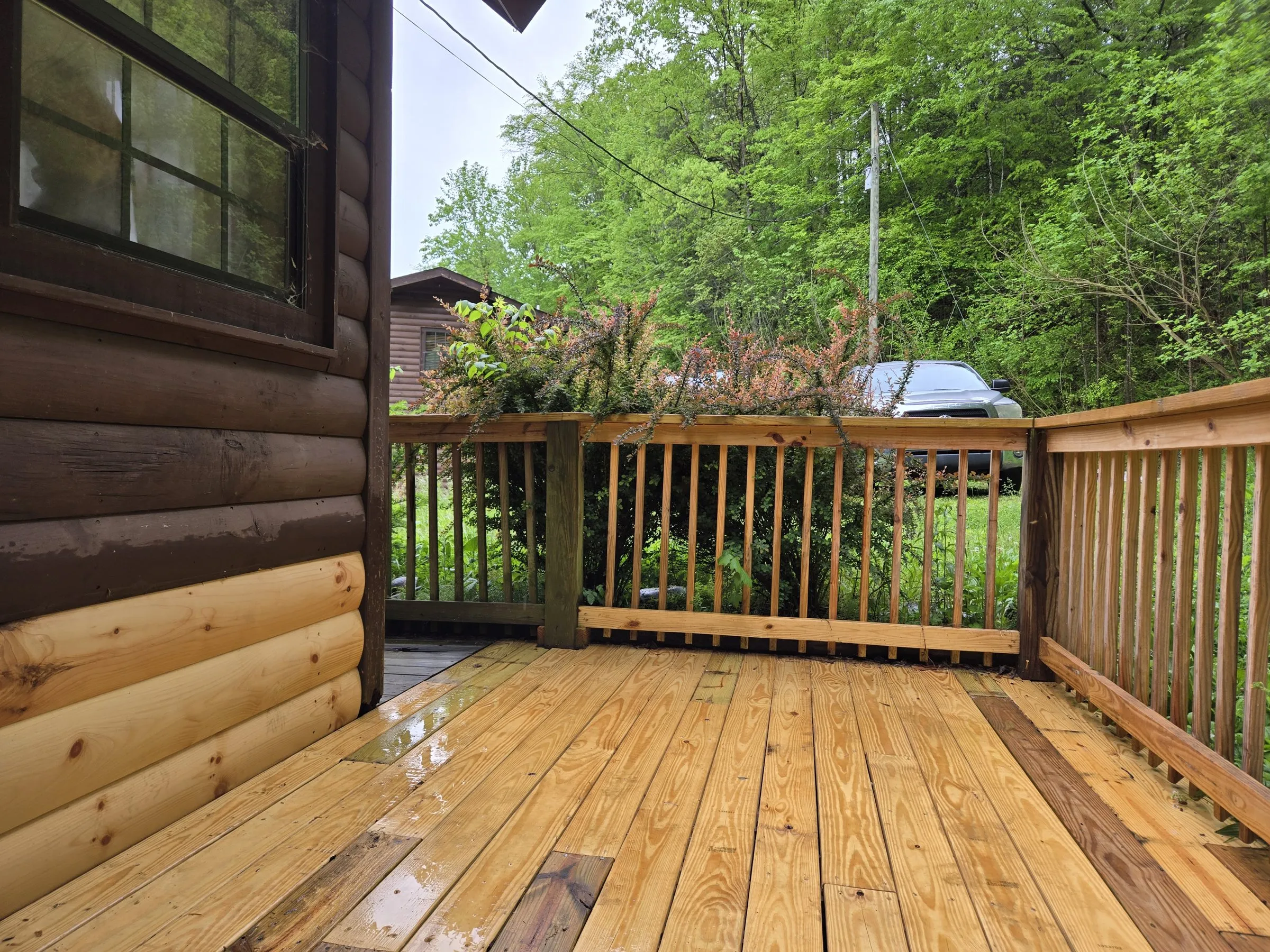
The same deck in August 2024 with the boards off, showing the joists underneath
The cabin deck corner in April 2024, with new boards, new railing and new log siding
April 2024August 2024
Same deck, four months apart. Drag to compare.

What a repair job can hide

Another contractor had been hired to make the deck look nice, and on top it worked. Underneath, the structure told a different story:

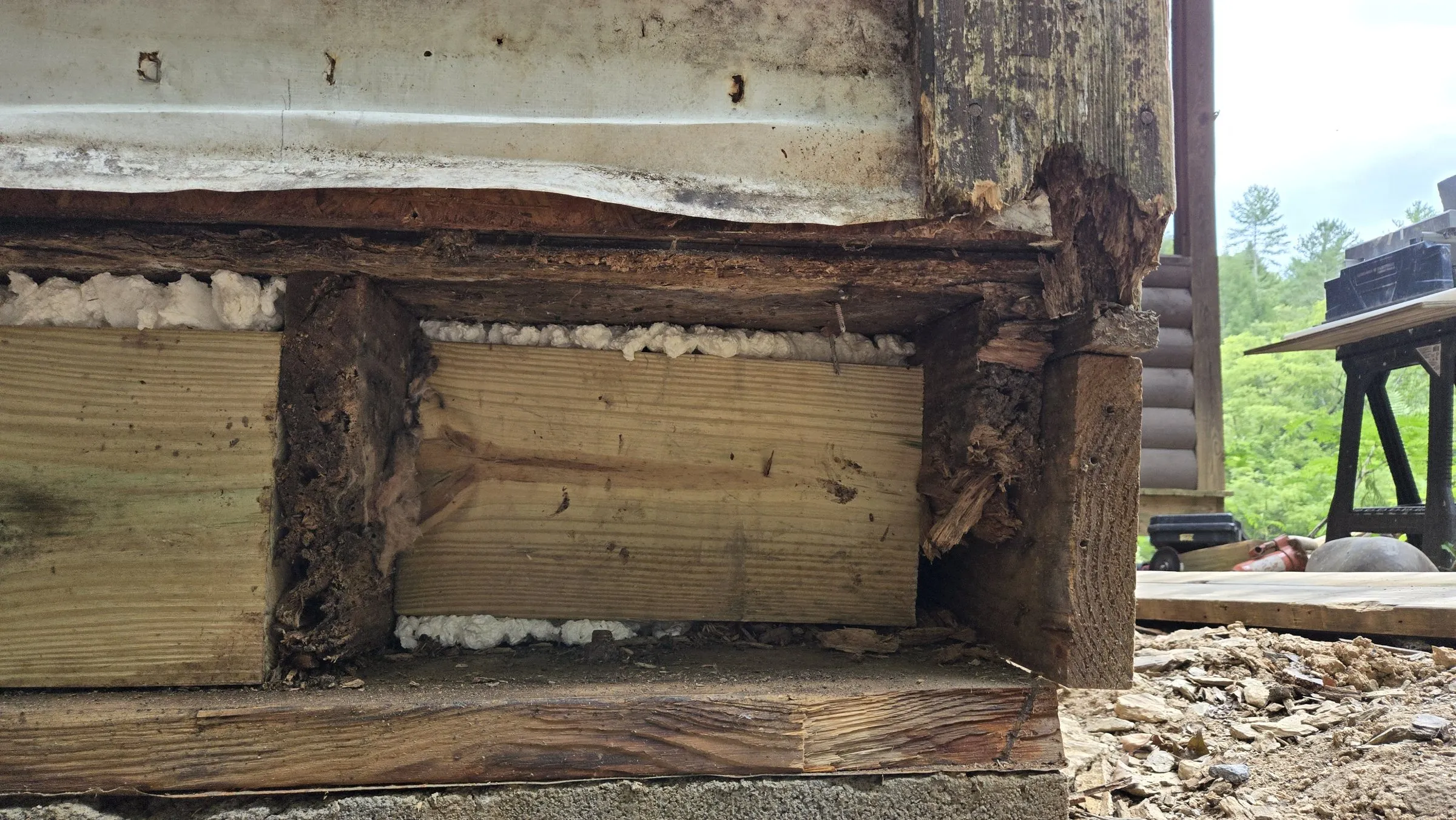
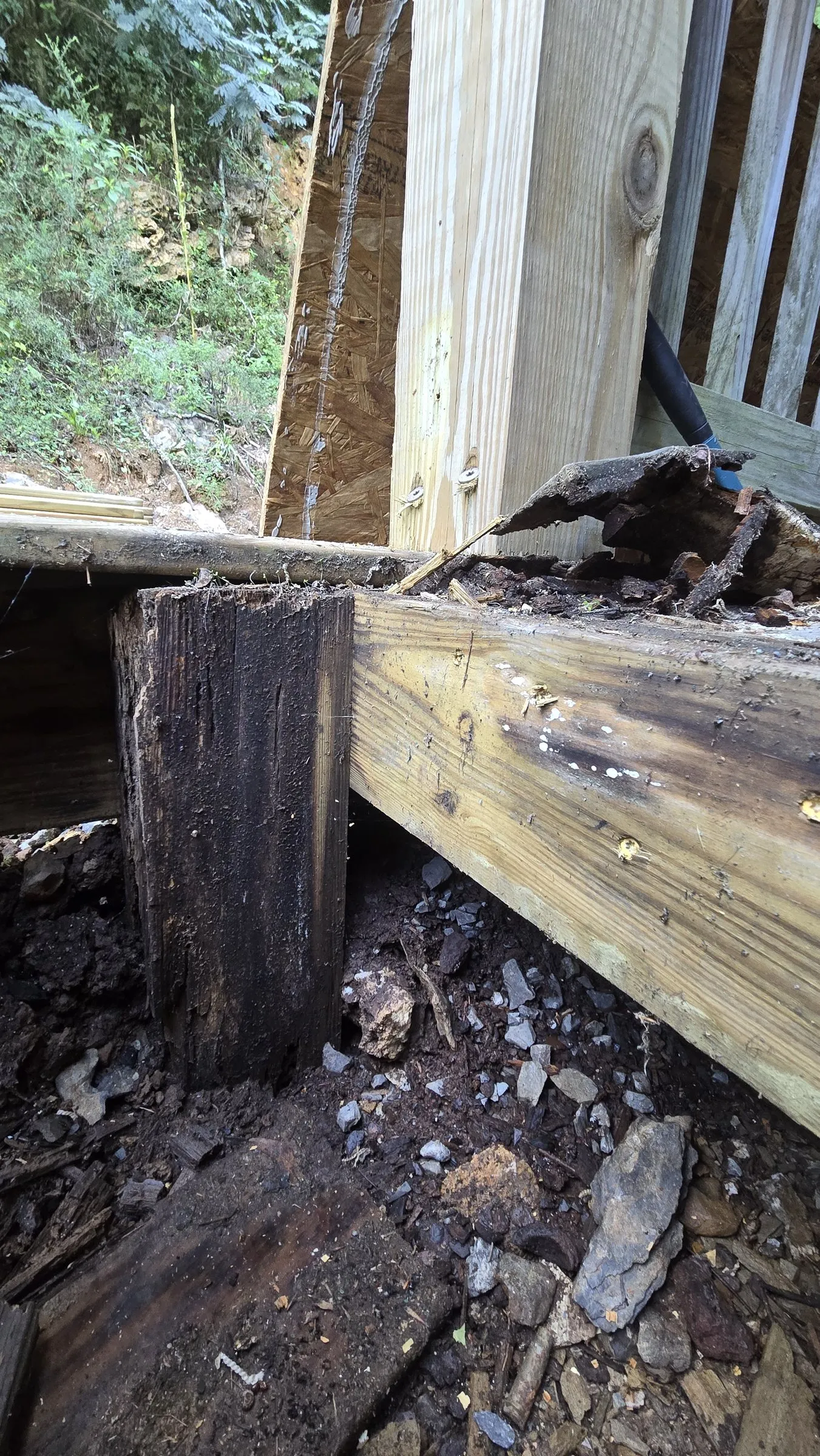
  • A rotted rim board at the house. The board that ties the deck to the cabin had decayed, and the wall bottom next to it was rotted too.
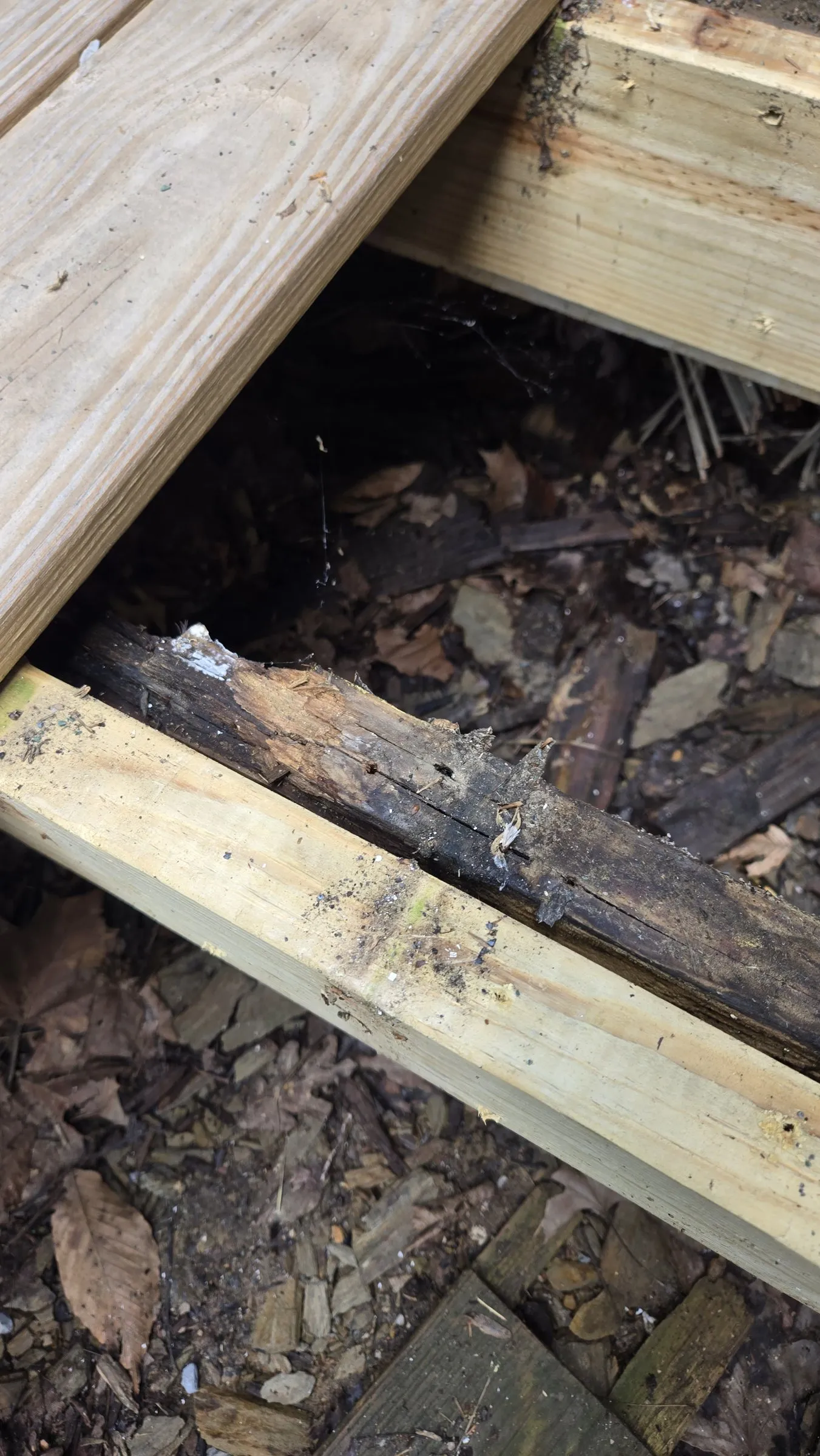
  • Joists that were not really repaired. Several old joists were so far gone that new lumber had been fastened alongside them. A new board beside a rotted one does very little, because the rotted wood is still there and the new board is still tied into the same wet framing.
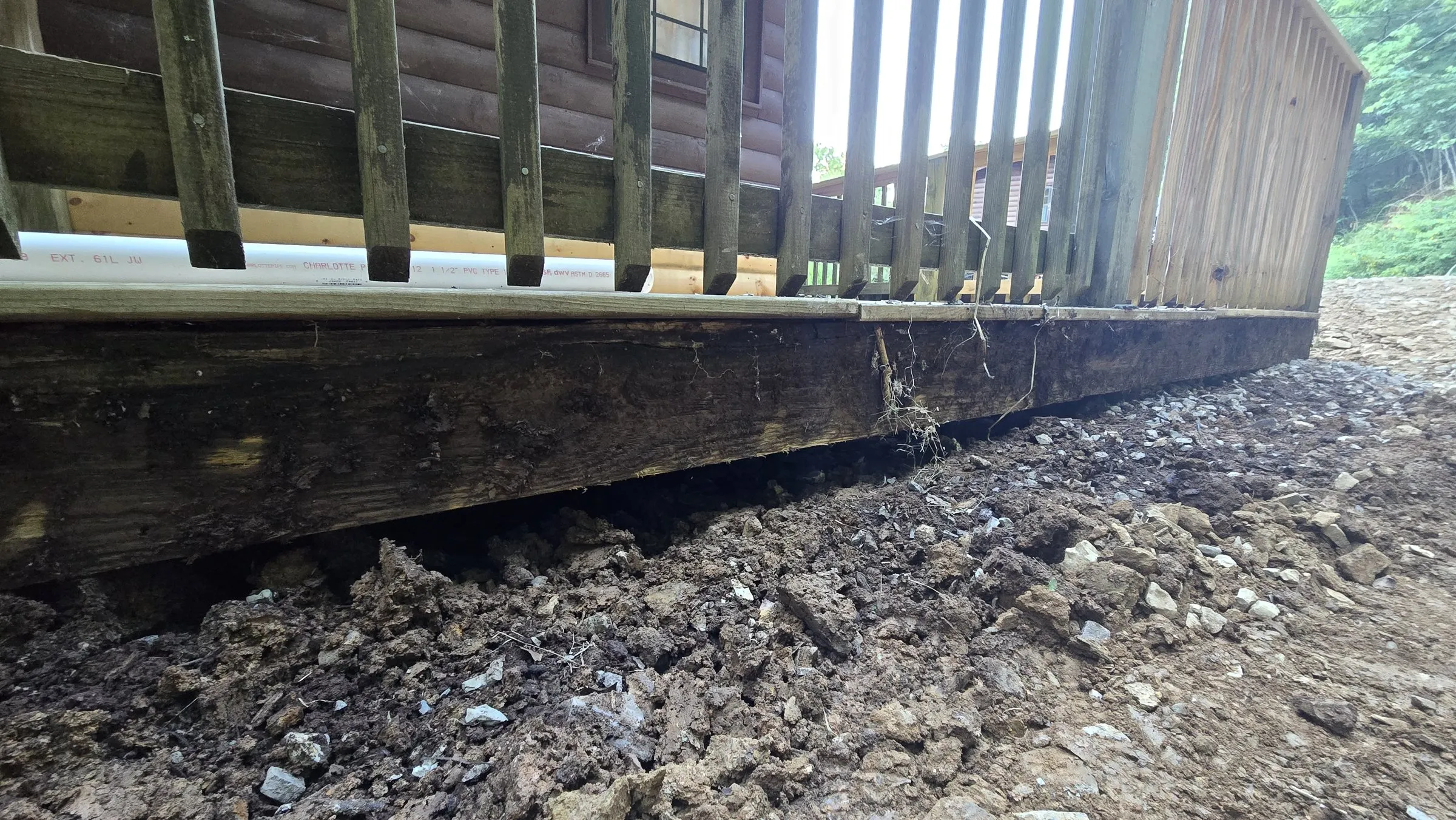
  • Dirt against the wood. Soil and gravel were piled against the deck's framing, keeping it wet from the ground up. That is how a deck rots from the inside, no matter how good the top looks.

None of this was visible from the top, which is why the home inspection didn't catch it. That is the point. A deck can look perfect, get through an inspection, and still be failing underneath.

  • Rotted rim board where the deck meets the cabin wall
    The board that ties the deck to the cabin, rotted through.
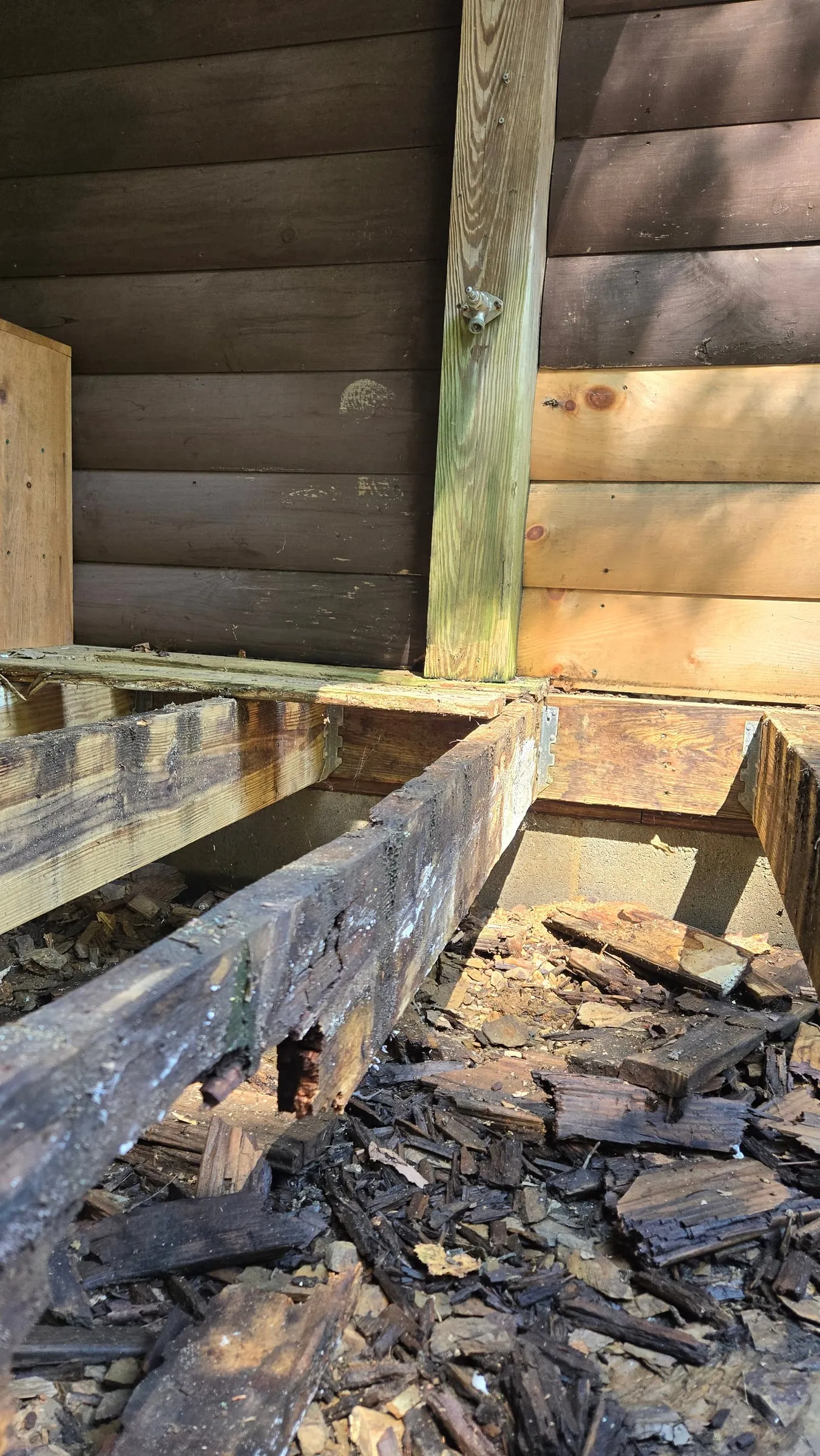
  • Deck joists in metal hangers at the cabin wall, one with a chunk rotted out of it, rotted debris piled on the ground below
    Right where the deck hangs off the house: a joist with a chunk rotted out of it.
  • A new joist fastened beside an old joist that has rotted
    A new joist fastened beside a rotted one.
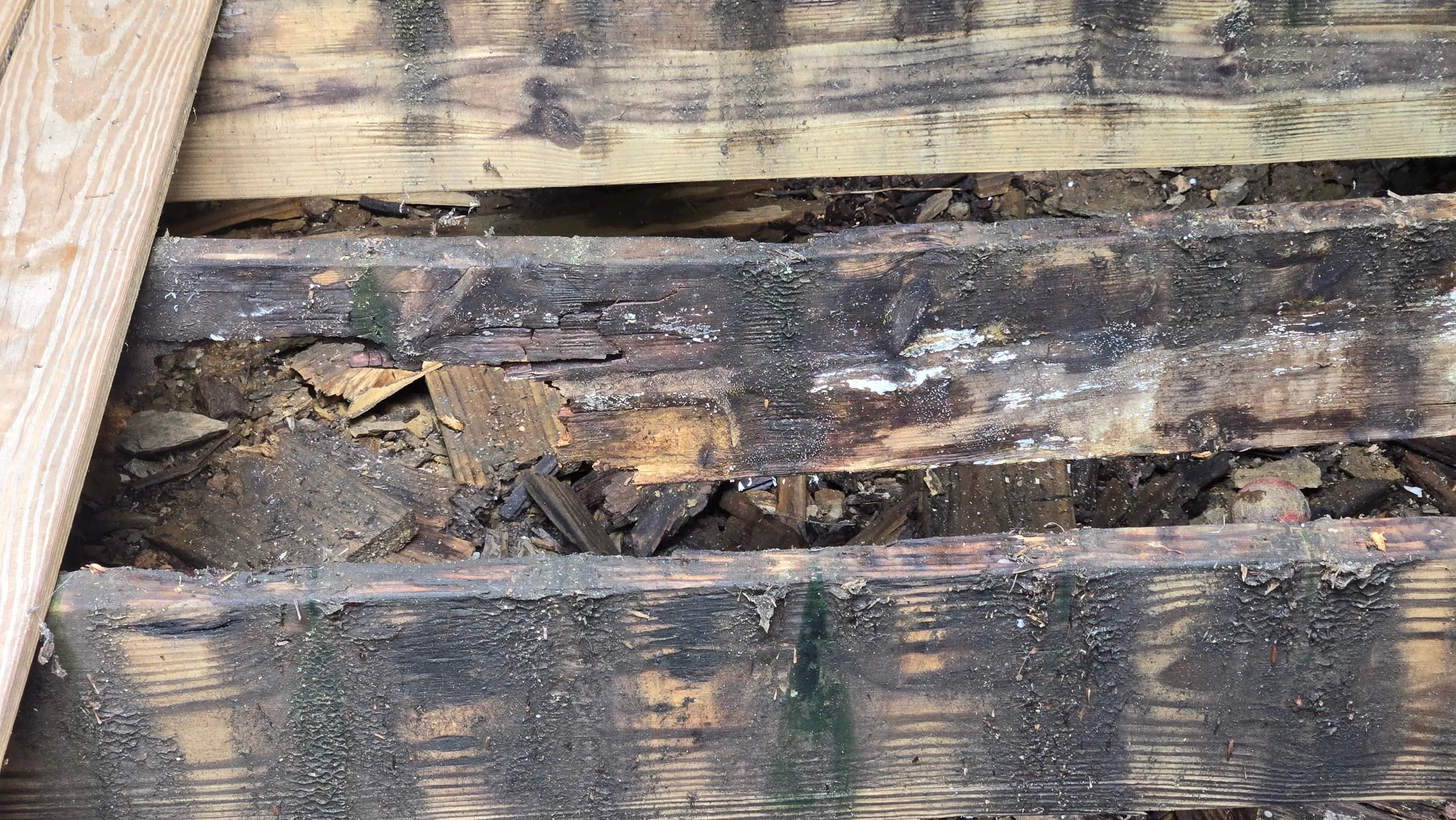
  • Looking down between deck boards at a joist split open and coming apart, with white growth on it and rotted pieces below
    Split open and coming apart, under boards people were walking on.
  • Soil and gravel piled against the deck framing
    Dirt piled against the framing keeps wood wet from the ground up.
  • Rotted bottom of a post next to new lumber
    A post base that had turned to mush.

What "doing it right" meant here

We are not interested in making a deck look good for a season. We tore it down to the bones and rebuilt it in this order:

  1. Opened it up and looked. We pulled the decking and photographed every problem before touching anything, so nothing was guesswork.

  2. Cut out everything that was rotted. Not sistered. Not covered. Rotted wood came out, including the damaged rim board and the rotted bottom courses of log siding on the cabin wall.

  3. Fixed the water problem, not just the wood. We pulled the dirt away from the framing and dug a gravel drainage trench along the foundation so water leaves instead of sitting.

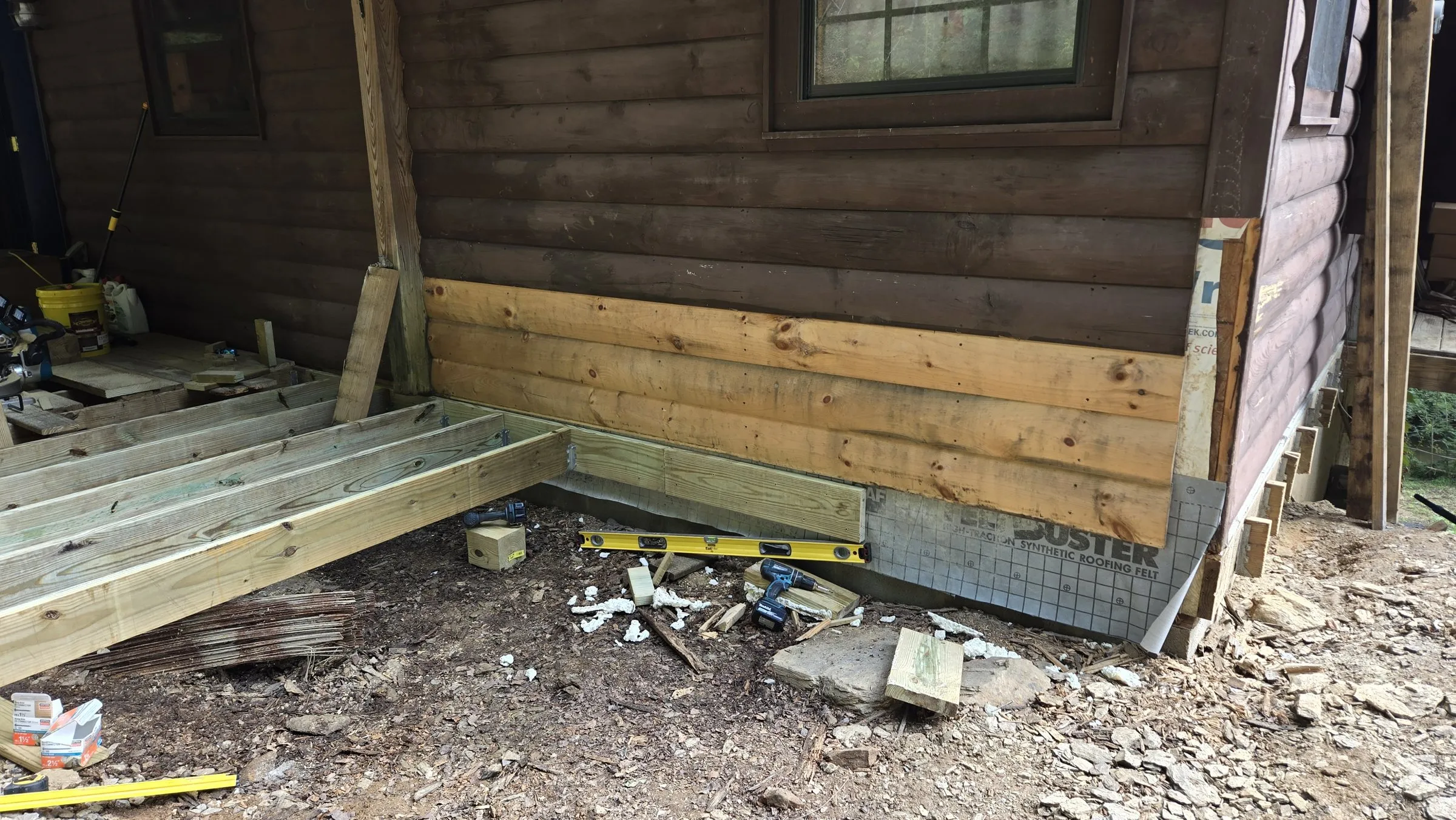
  4. Rebuilt the structure with new framing, correct connectors, and level, square layout. New joists, new connectors, and a level check at every step.

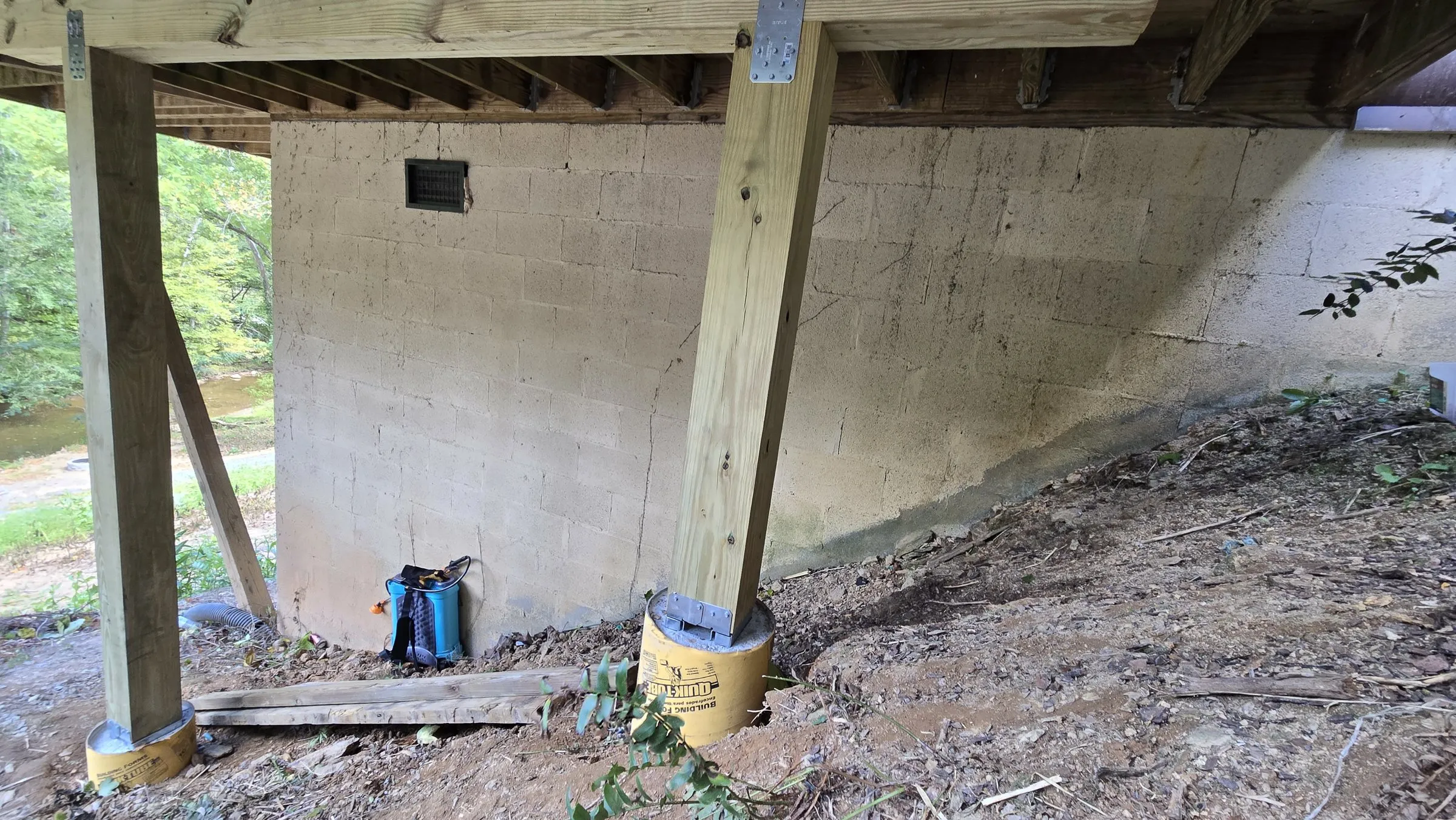
  5. Set new posts on concrete footings so the posts are not sitting in wet ground.

  6. Finished it properly. New decking and matching stain to the cabin. New railings where needed. Left open where there was no ledge.

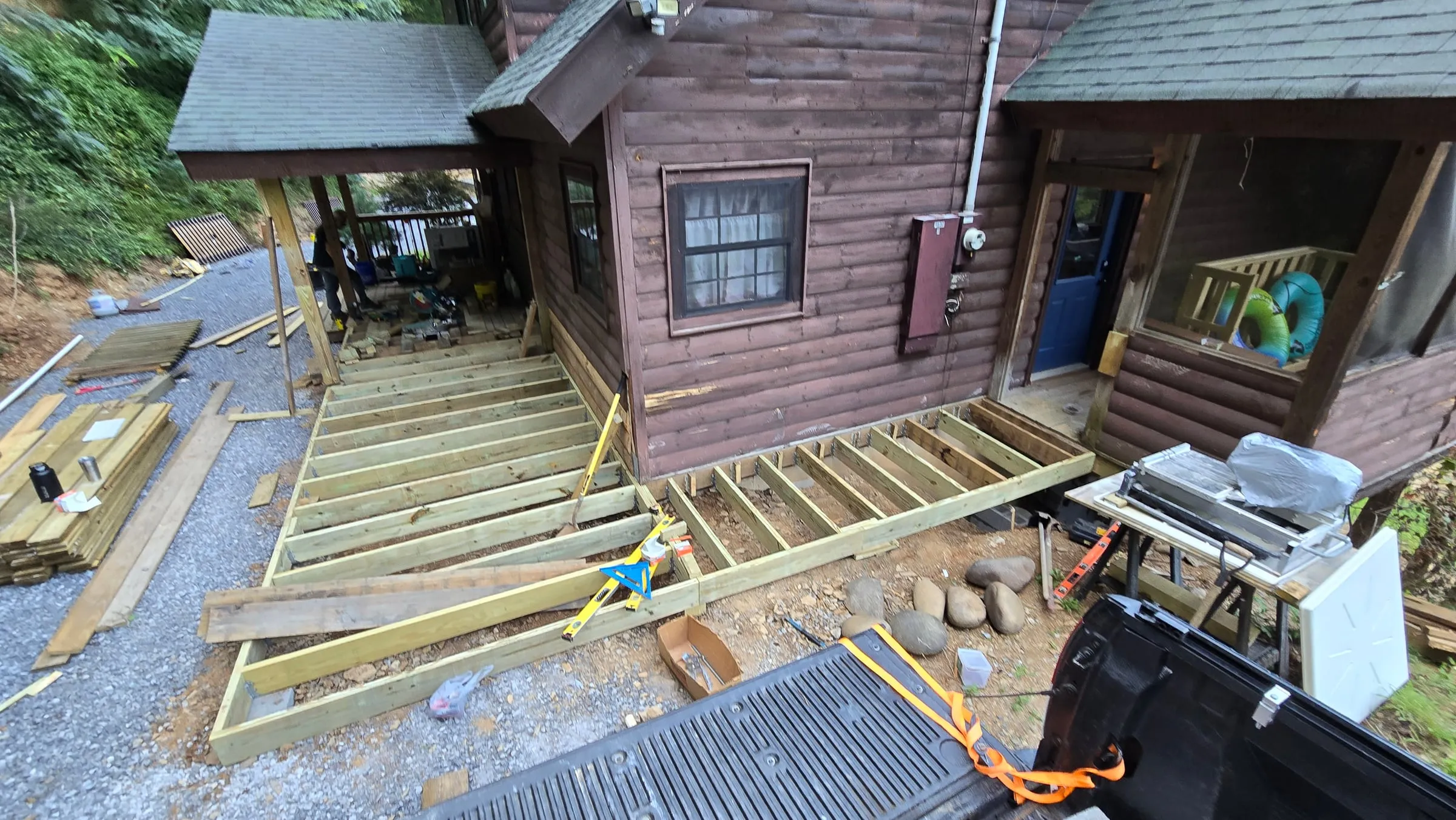
  • New deck framing set level against the cabin wall
    New framing, checked level at every step.
  • New post standing on a concrete footing with a metal post base
    New post on a footing with a real post base.
  • New pressure-treated deck framing with metal joist hangers wrapping two sides of the log cabin, stacks of new decking boards nearby
    The whole frame rebuilt with new lumber, ready for decking.

We treated it like our own, because it was

This one was personal. We could have patched the worst spots and moved on, and the deck would have passed a quick look. But guests would be sleeping above it and walking on it, and we would be the ones answering for it. So we did the repair we would want on anyone's deck: cut out the rot, fix the water, and rebuild it so it lasts. That is the standard we bring to your job.

We only found it after we bought the place. We do it right so that doesn't happen to anyone else.

Why we show you the photos

When we open up a deck and find damage nobody could see, we do not quietly bill you for it. We stop, show you the photos, explain what we found, and price the extra work before we continue. You decide with the same information we have.

That is also why we take photos on every job. You stay informed, in the loop, and engaged.

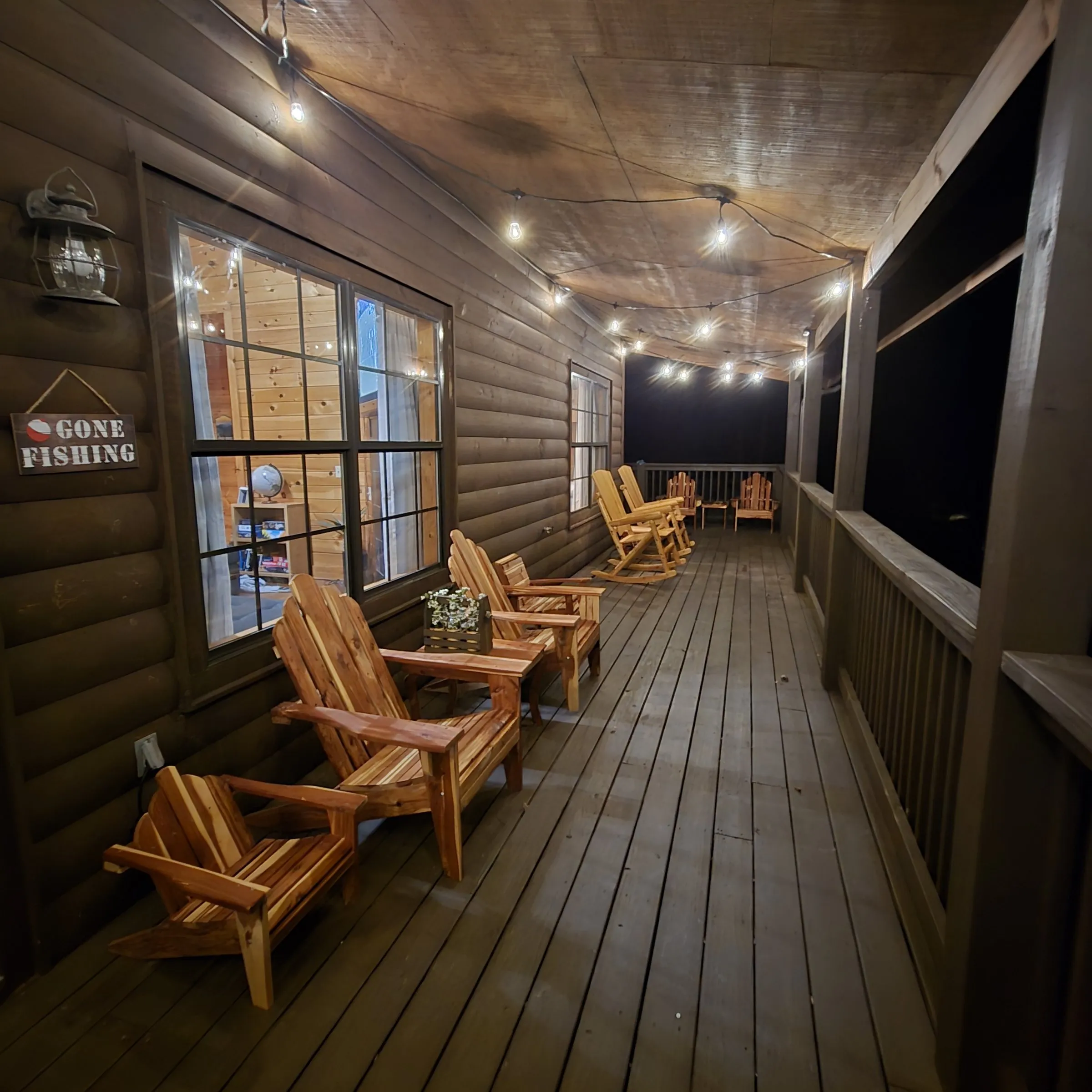
A finished section of the cabin deck, lit at night with string lights

Is your deck hiding something?

A deck that looks fine can still be a problem. Here are signs worth checking:

  • Soft or spongy spots when you step on a board
  • Railings or posts that wobble
  • A deck that bounces or slopes
  • Soil, mulch, or leaves piled against the framing
  • Stain or paint on a deck that has never been looked at underneath
  • Rusty, loose, or missing connectors at the house

If any of that sounds familiar, send us a message. We will come take a look, tell you what we see, and show you the photos.

Get your deck looked at

Free estimates. Serving Oak Ridge, Clinton, Oliver Springs, Kingston, Farragut and West Knoxville.

CallTextFree Estimate